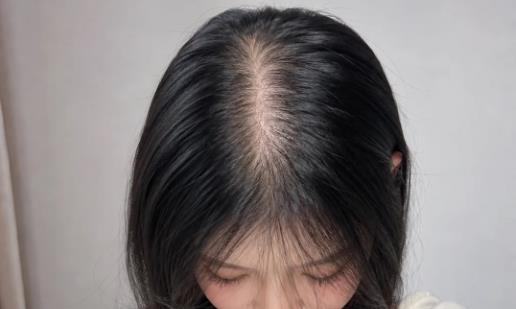
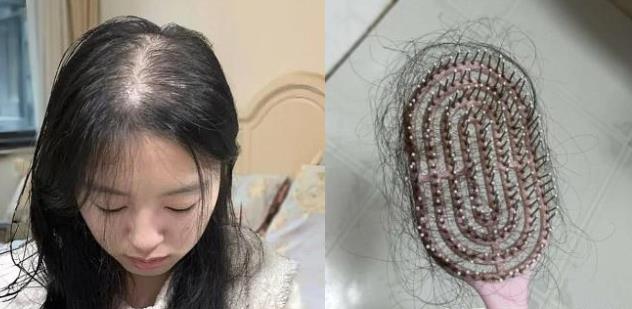
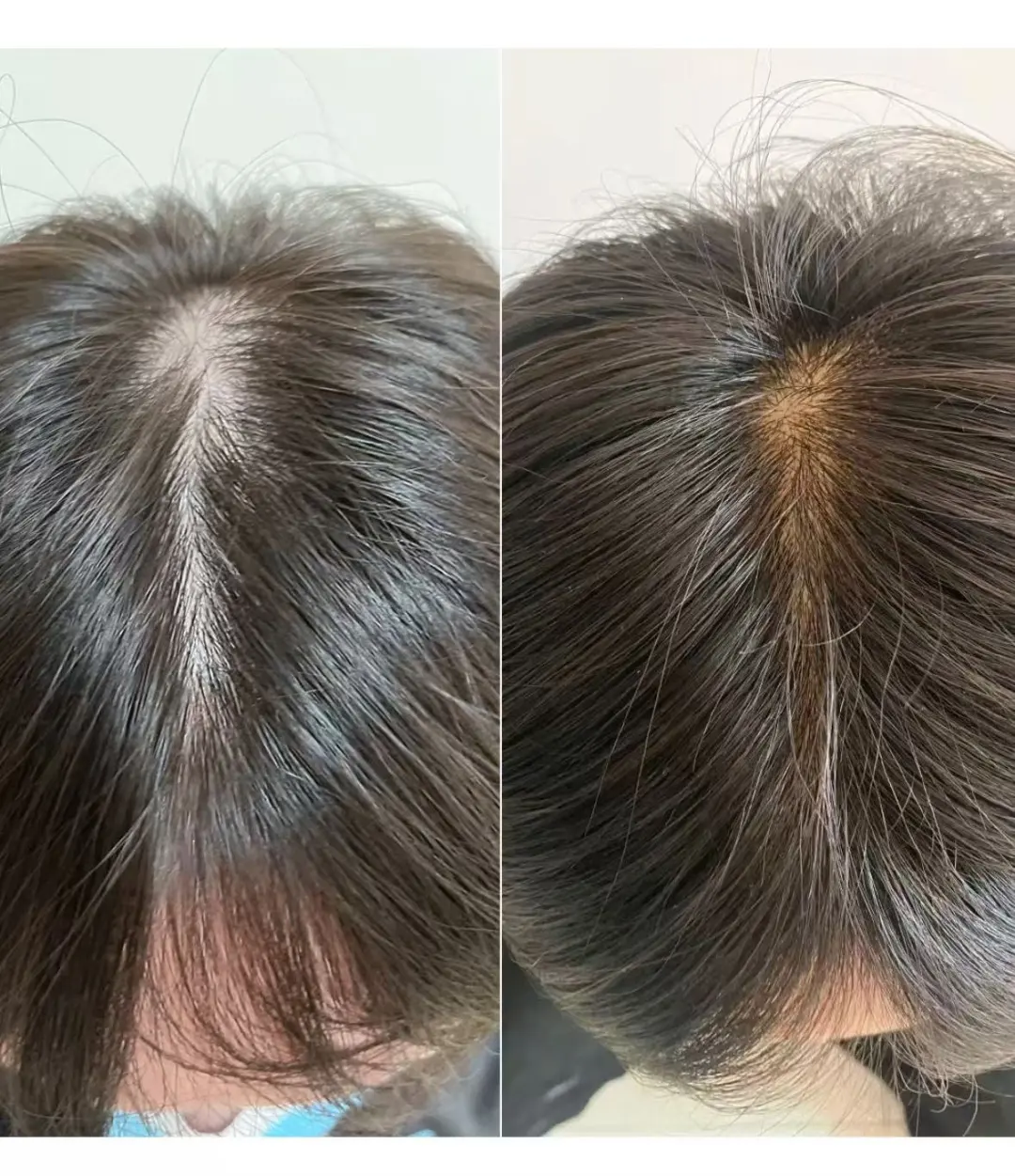
Have you noticed that more and more young people are losing hair? In the past, hair loss was seen as a middle-aged problem. Now, people in their twenties and early thirties are already seeing their hairline recede and their hair part getting wider. This is especially true in Singapore, where school stress, late nights at work, and a steady diet of takeout, bubble tea, and fried chicken all take a toll on your hair.
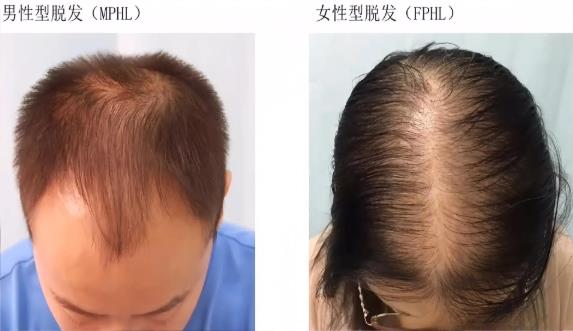
Losing 50 to 100 strands a day is actually normal. But if you notice significantly more than that when washing, blow-drying, or combing—and it keeps happening for a while—it's not just "seasonal shedding." It could be androgenetic alopecia (AGA), also known as seborrheic alopecia, the most common type of hair loss. It's not just a guy thing; women get it too. The typical signs: an oily scalp, a hairline that slowly moves back, or thinning on the crown until you can see the scalp. Hair goes from thick and coarse to fine and soft, like little fuzz.
Why does this happen? It's linked to genetics and hormone levels, but today's young people—pulling all-nighters for papers, overtime at work, and living on takeout and bubble tea—are adding fuel to the fire. Too much oil on the scalp suffocates the hair follicles. Hair starts to thin, soften, and eventually stops growing.
Many people panic and start switching shampoos, buying hair growth serums, and eating black sesame. Not that these are completely useless, but most only work on the surface. The hair follicle openings are clogged with oil, the scalp environment is a mess, nutrients can't get in—so nothing really works.
Gongfangtang · TSHL Scalp Care Center offers TSHL Hair Revitalising Therapy™ (TSHL Hair Revitalising Therapy). It's not just a simple scalp clean. It goes from the scalp surface deep into the hair follicles, helping to awaken the scalp's own healthy vitality.
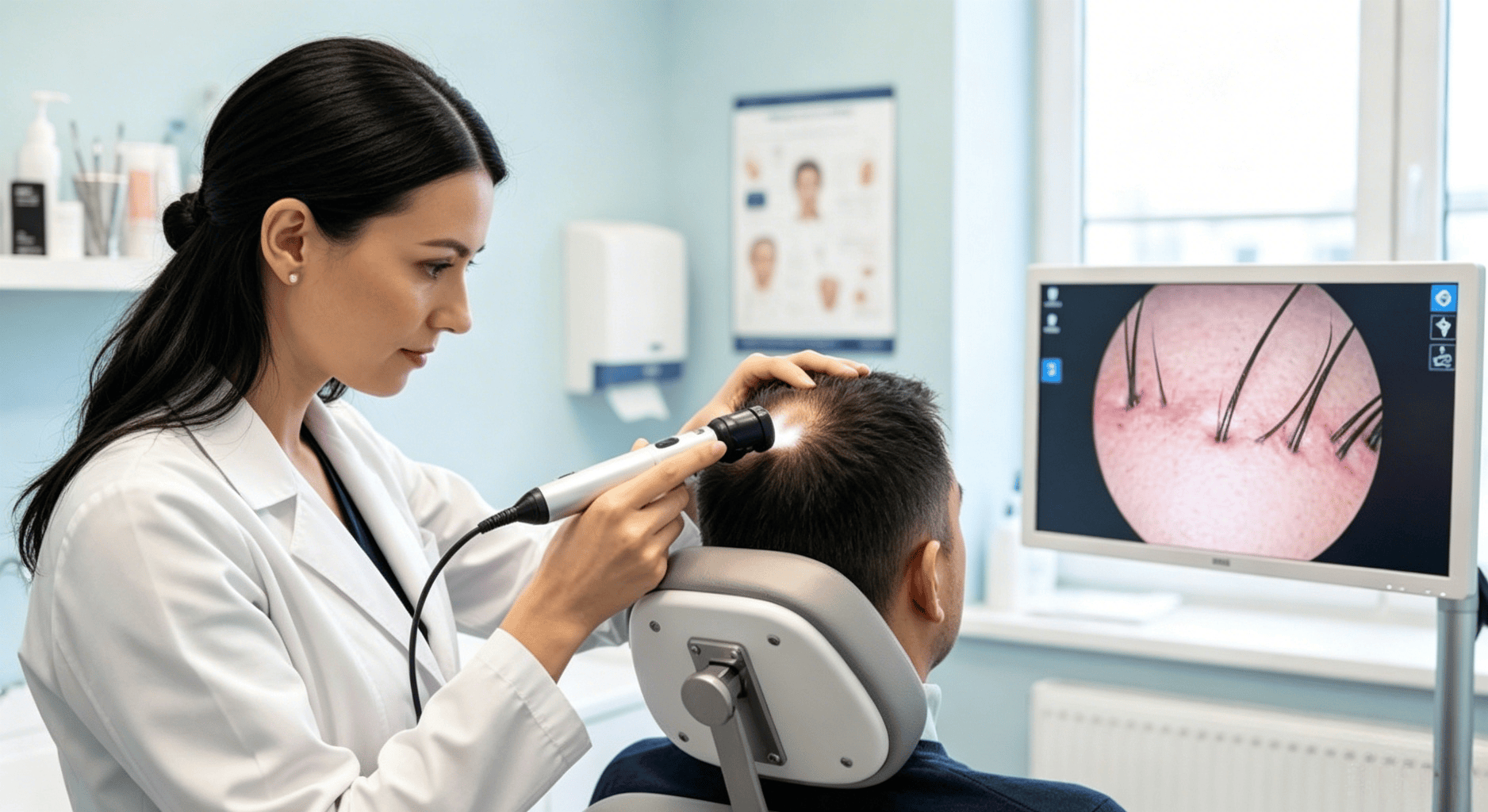
The first step is a hair follicle examination. Using a magnifying instrument, you can clearly see whether the hair follicle openings are clogged, how much oil there is, the ratio of thick to thin hair, and whether the hair follicles are still alive or already shrunken. You'll know exactly how serious your hair loss is.
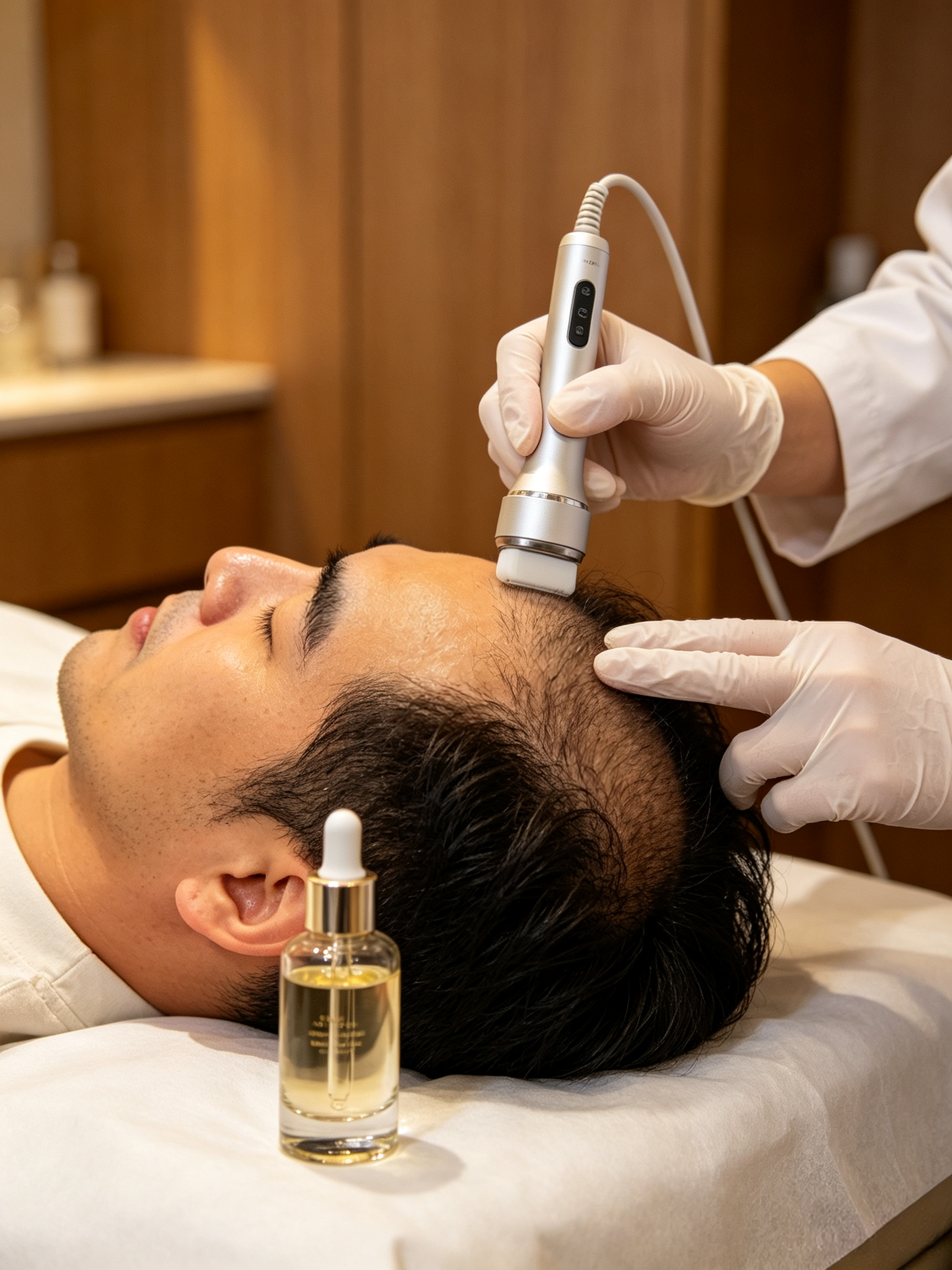
After the examination, a plan is made for each person. Not everyone gets the same set. Some people have severe oil blockage, so the focus is on purification first. Others have hair follicles that are already fine and soft, so the focus is on nourishing and infusion. The whole process includes scalp purification, Chinese herbal scalp steam treatment, head meridian release, GFT hair growth essence infusion, low-level light therapy, and home care management. One-person-one-formula, slowly bringing the scalp environment back into balance.
Many people who have tried this scalp therapy report that with consistent sessions, their scalp oiliness improves, and their hair no longer feels so thin, soft, and weak. But to be fair, scalp care is not a quick fix. There's no one-time miracle cure. Hair follicle nourishment is a long-term battle. Patience and a scientific approach are the only way to gradually regain your hair.
With androgenetic alopecia, the longer you delay, the harder it is to save the hair follicles. If it's been going on for a while, stop messing around on your own. First go to Gongfangtang · TSHL Scalp Care Center for a hair follicle examination, see what's actually going on with your hair follicles, and then get a personalised plan. Hair care is a long-term battle—patience and science, both are essential.
Don't wait until the hair follicles are completely closed before you regret it. With hair, the earlier you take action, the more chances you have.
This article provides general educational information and is not medical advice.