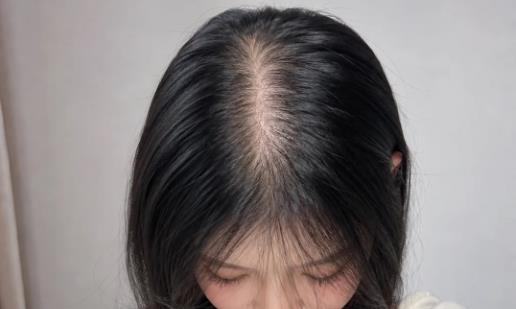
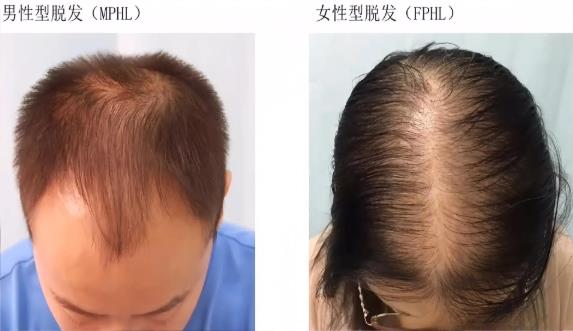
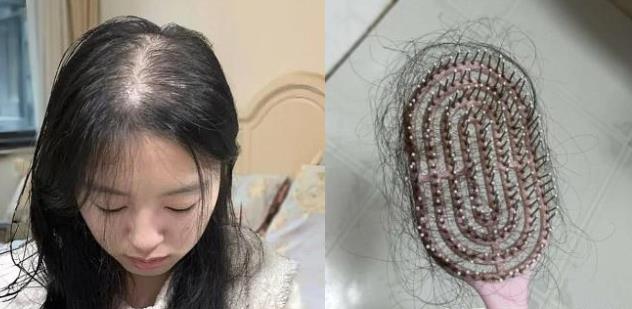
“I wash my hair every day, but by afternoon it's oily and stringy again. My crown is getting thinner and thinner — in photos, my scalp reflects light and I look ten years older.”
This is a common complaint among many in Singapore. With its year-round heat and humidity, scalp oil production here is naturally higher than in drier climates. Add work stress, late nights, and a diet rich in oily and spicy food, and hair loss becomes an even bigger problem.
A thinning crown and an oily scalp often appear together — and are usually treated as two separate issues. Oily scalp? Use a控油 shampoo. Thinning hair? Buy a hair growth serum. The result? The oil keeps coming, and the hair keeps falling.
From the perspective of Traditional Chinese Medicine (TCM), these two problems actually share the same root cause: damp-heat accumulation and qi-blood deficiency.
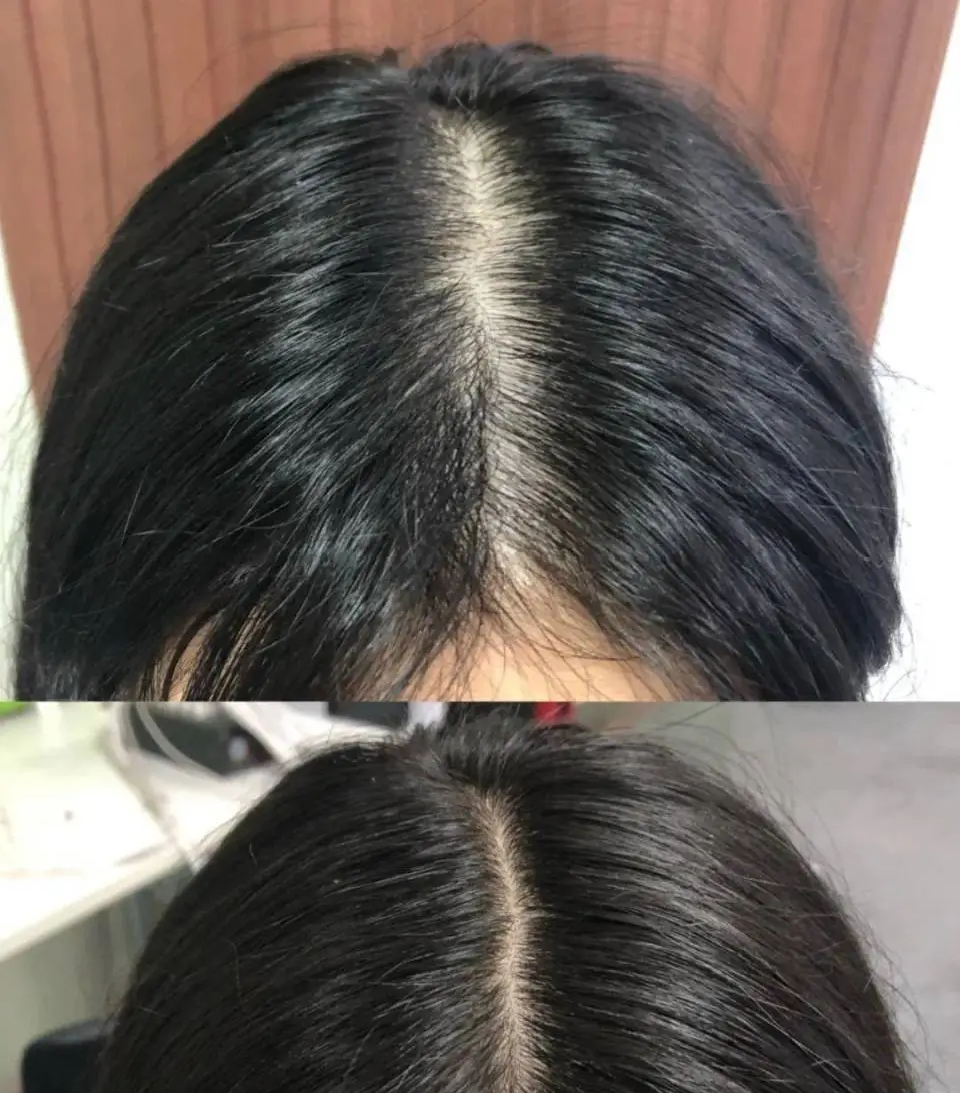
Why Does the Crown Thin First? Why Is the Scalp So Oily?
An oily scalp is caused by damp-heat rising upward.
Singapore's humid climate, combined with a diet high in sugar and oil and irregular sleep patterns, weakens the spleen and stomach's transportation function. Damp turbidity accumulates internally. Over time, it generates heat, forming damp-heat. This damp-heat rises to the head, making the scalp a "disaster zone" — excess oil secretion, blocked follicles, itching, and increased dandruff.
The crown thins first because qi and blood cannot reach it.
The crown is where all yang meridians converge — the hardest place for qi and blood to reach. When qi and blood are insufficient, or when blocked meridians prevent proper transportation, the follicles at the crown are the first to be "cut off." Hair roots loosen, hair becomes thinner and softer, and eventually falls out in patches.
So a thinning crown plus an oily scalp essentially means "blockage" and "deficiency" exist simultaneously — damp-heat blocks the follicles, while qi and blood fail to reach them. Controlling oil alone won't feed the follicles; tonifying qi and blood alone won't clear the damp-heat.
GFT TSHL Hair Restoration Therapy™: Diagnose First, Then Nourish
Targeting the common issues of thinning crown, oily scalp, and fragile hair roots in Singapore, Gongfangtang · TSHL Head Therapy Center presents TSHL Hair Restoration Therapy™ — a comprehensive program centered on follicle nourishment and hair health management.
Its core approach: Don't rush to tonify — diagnose first. Don't blindly control oil — clear the source first.
Step 1: Professional TCM Physician Constitution Diagnosis.
Registered TCM physicians at Gongfangtang personally consult with you to determine whether you have damp-heat accumulation, qi-blood deficiency, liver-kidney depletion, or meridian blockage. Different constitutions require completely different treatment directions.
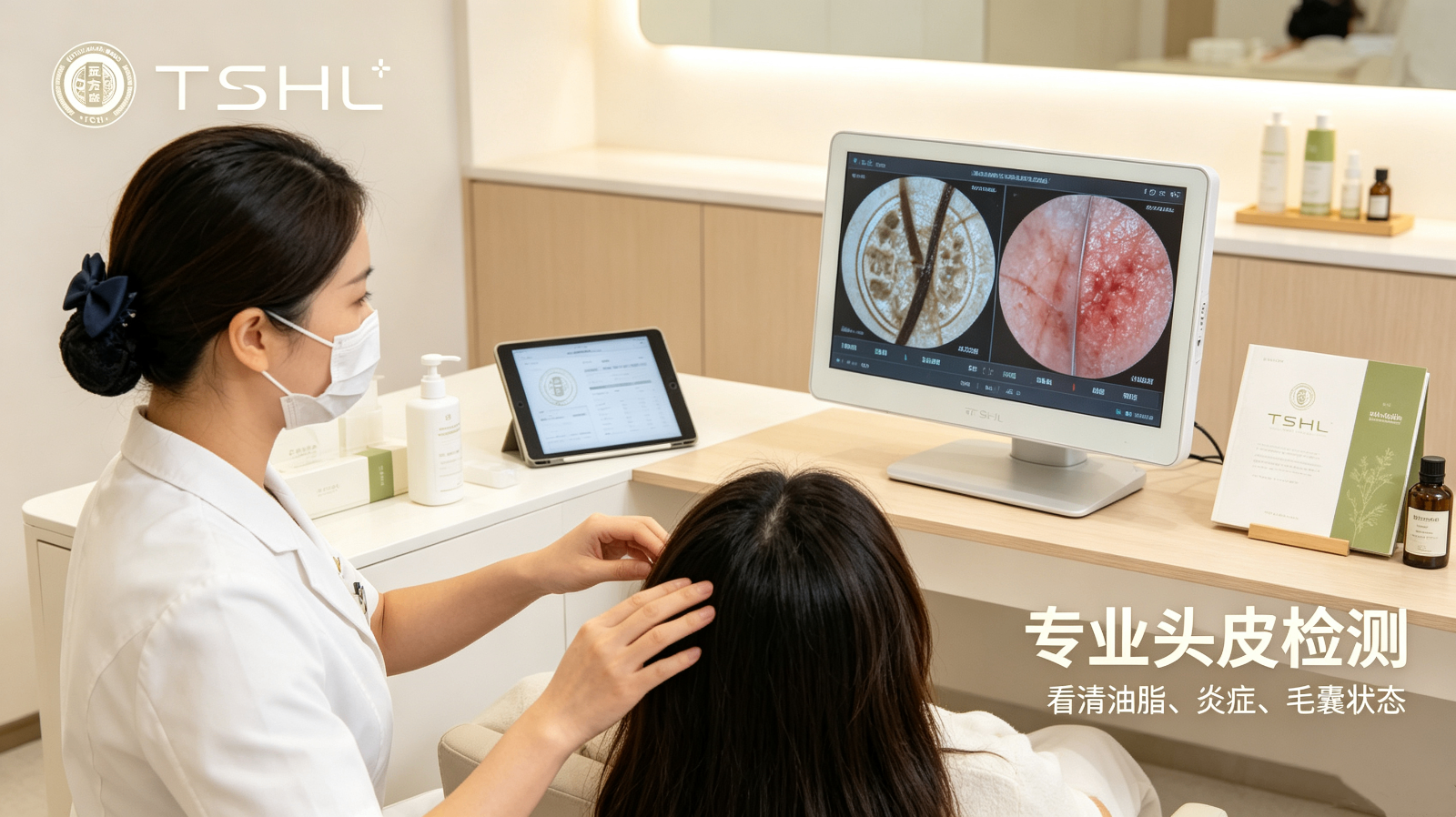
Step 2: AI Scalp Follicle Detection.
Professional equipment digitizes the degree of follicle blockage, oil secretion levels, hair shaft thickness, and follicle count. Is your follicle "starving" or "blocked"? Has it atrophied or is it merely dormant? It's all clear at a glance.
Step 3: Formulate a Personalized Plan.
Based on diagnosis and detection results, a complete plan of "internal regulation + external nourishment + instrument assistance + home management" is created — clearing damp-heat and tonifying qi and blood internally, while dredging meridians and purifying the scalp externally. Combined with professional methods such as GFT hair growth essence infusion, nutrients truly reach the follicles.
Step 4: Regular Follow-up and Adjustment.
The plan is dynamically adjusted according to recovery, with every step evidence-based.
TSHL Hair Restoration Therapy™ is particularly suitable for:
Thinning crown, widening part, receding hairline
Oily scalp, dandruff, itching
Adjuvant management of androgenetic alopecia
Postpartum, stress-induced, and telogen effluvium hair loss
Thin, brittle, lusterless hair
Increasing white hair, fragile roots, and daily hair strengthening
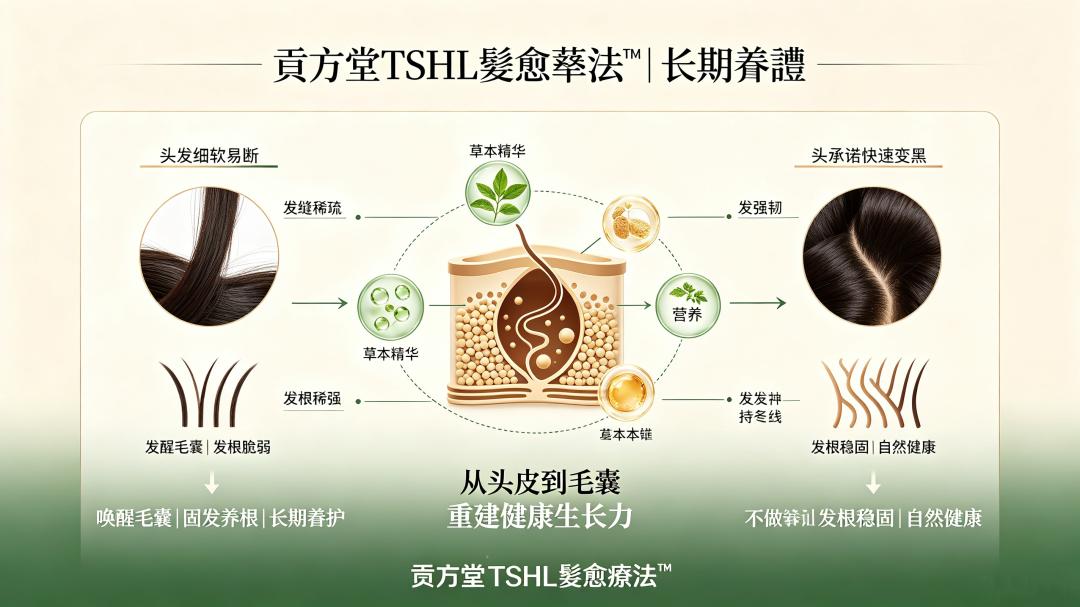
Gongfangtang TSHL Hair Restoration Therapy™ — From scalp to follicle, awaken healthy growth power.
This article provides general educational information and is not medical advice.