In Singapore, many people go through this: Your hair gets so oily it sticks to your scalp after just one day without washing. Your hairline slowly recedes, and the parting on your crown gets wider. At first, you think it’s just stress or seasonal shedding. But after a year or two, your hair becomes finer and softer, and you can already see your scalp on top.
This may not be ordinary hair loss—it could be hormonal hair loss, commonly known as androgenetic alopecia or male pattern baldness.
The root cause of androgenetic alopecia lies in a substance called DHT (dihydrotestosterone). Think of it as a small knife that specifically targets the hair follicles on your forehead and crown. Over time, the follicles shrink, hair becomes thinner, and eventually it stops growing altogether. The longer you delay, the more follicles shrink, and the harder it is to grow hair back.
But many people don’t know that those with androgenetic alopecia often have another problem—very oily scalp.
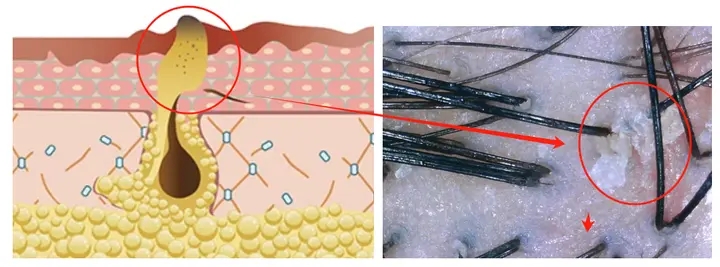
When GFT Nano Scalp Care Centre in Singapore does a scalp scan, they find that many people with androgenetic alopecia have their follicle openings clogged with a mixture of oil and dead skin cells. Once the follicle openings are blocked, two problems arise: first, hair cannot metabolise normally, so it can’t grow out; second, any anti-hair-loss ingredients you apply can’t penetrate at all—no matter how much you use, it’s useless.
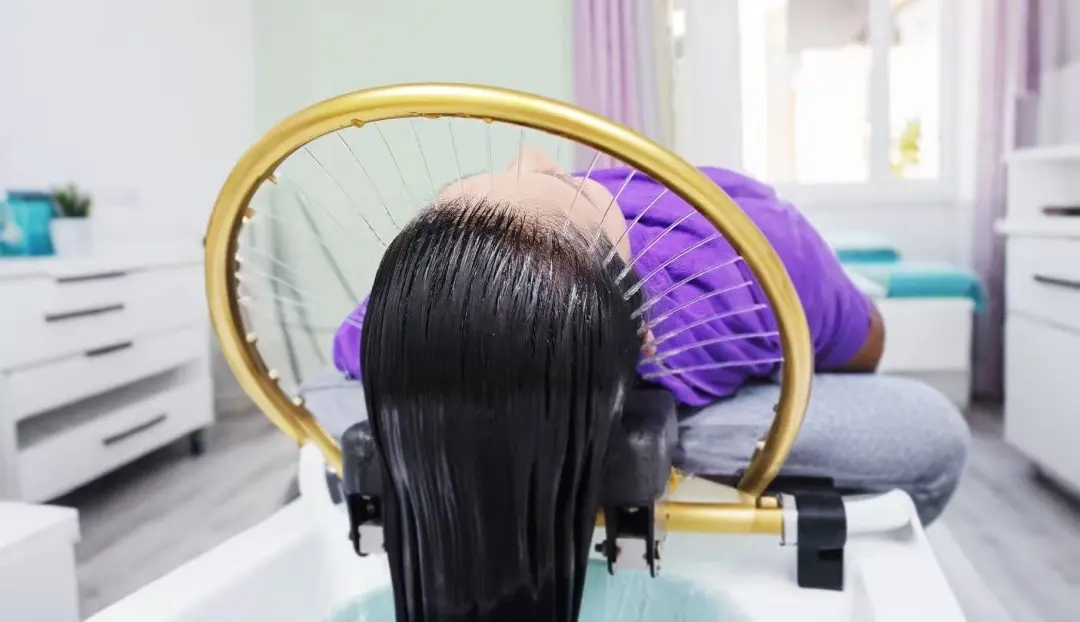
So improving androgenetic alopecia is not just about using a bottle of hair growth serum. You need to take two steps.
Step 1: Clear the blockage at the follicle openings first.
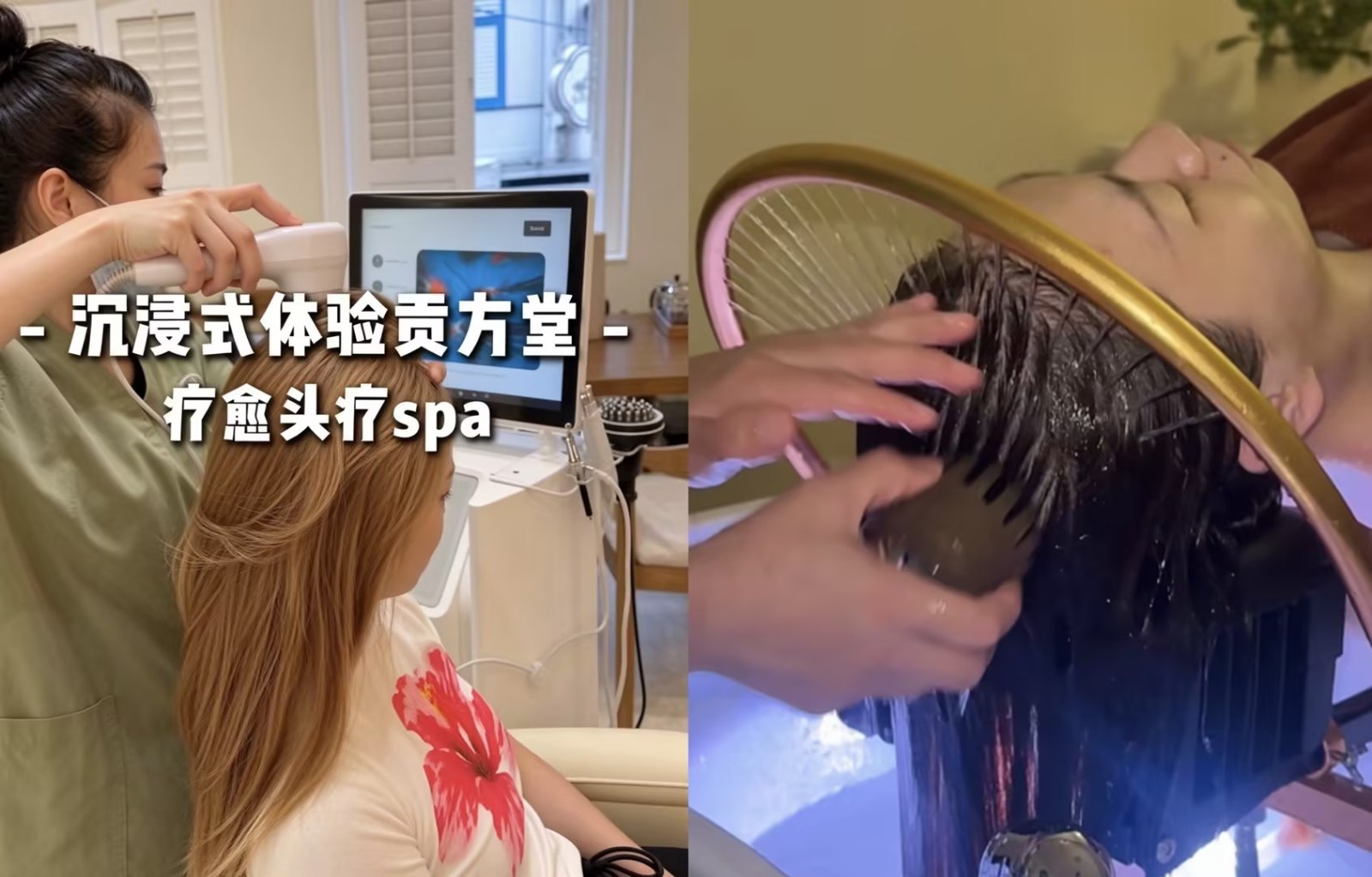
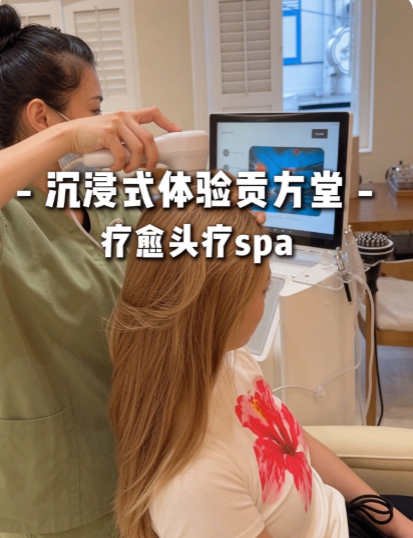
It’s like the drainage hole of a flower pot being sealed with mud. If you don’t clear the mud, no matter how much you water, it won’t seep through. GFT Nano Scalp Care Centre will first do a scalp scan to clearly show how clogged your follicle openings are. Then they do scalp purification, gently clearing away accumulated oil, dead skin cells, and hair product residue. Once the follicle openings are clear and the scalp can breathe, the subsequent care becomes meaningful.
Step 2: Stop DHT from attacking further, and awaken the shrunken, dormant hair follicles.
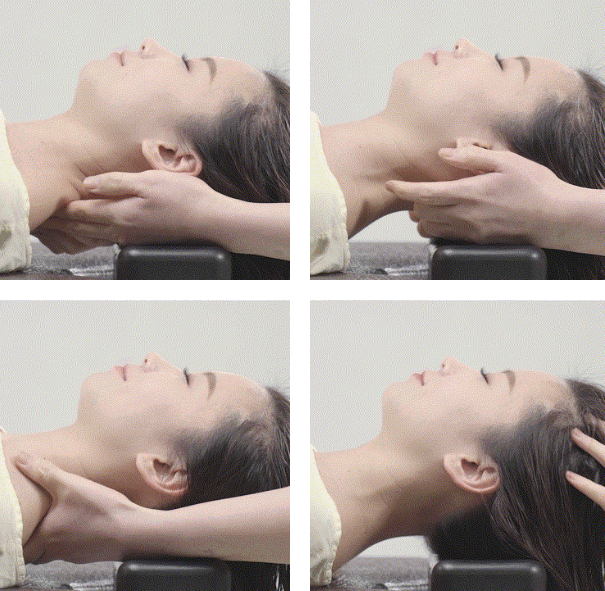
Clearing the blockage is only the first step—you still need to block that “small knife”. GFT Nano Scalp Care Centre uses herbal steam therapy, nano infusion, and acupoint stimulation to help improve the scalp environment, allowing active ingredients to better penetrate around the hair follicles. On one hand, it helps block DHT’s continuous damage to the follicles; on the other hand, it “feeds” the shrunken, dormant follicles, giving them a chance to grow hair again.
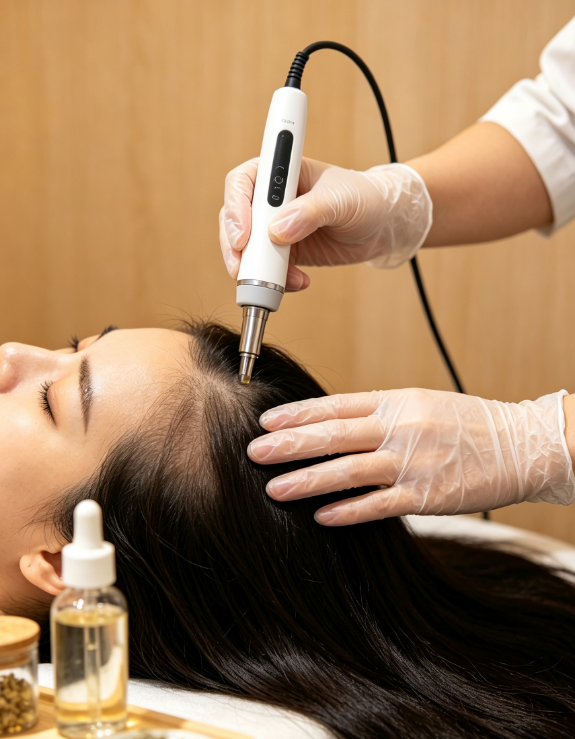
Simply put: clear the path, block the knife, then fertilise.
Of course, androgenetic alopecia doesn’t form overnight, and follicle recovery takes time. Don’t expect to grow a full head of hair after one session—that’s impossible. But after sticking with it for a cycle, many people notice: scalp oiliness slows down, hair loss stabilises, and fine baby hairs start appearing along the parting. Everyone’s constitution is different, so results vary. The earlier you manage it, the better your follicles’ chances. If you wait until the follicles are completely closed, no amount of money can bring them back.
In daily life, you also need to cooperate: sleep early, eat less oily and sweet food, avoid frequent perming and dyeing, don’t wash your hair with water that’s too hot, and don’t scratch your scalp with your fingernails. Singapore’s weather is hot and humid, so the scalp gets oily easily—but the oilier it is, the more you shouldn’t wash it aggressively. Gentle cleansing and a regular routine are better than anything.
If you’re in Singapore and troubled by a receding hairline, thinning crown, or oily scalp, don’t buy random products on your own. Go to GFT Nano Scalp Care Centre for a scalp scan, see what’s really happening with your hair follicles, then decide how to treat it. When it comes to hair, with the right direction, you won’t take the wrong path.
This article provides general educational information and is not medical advice.